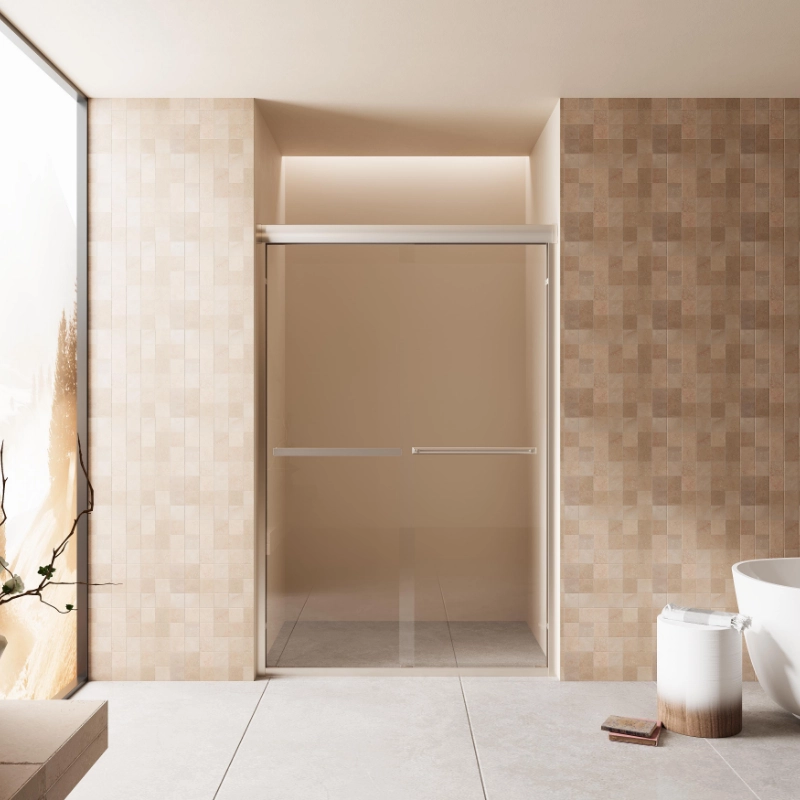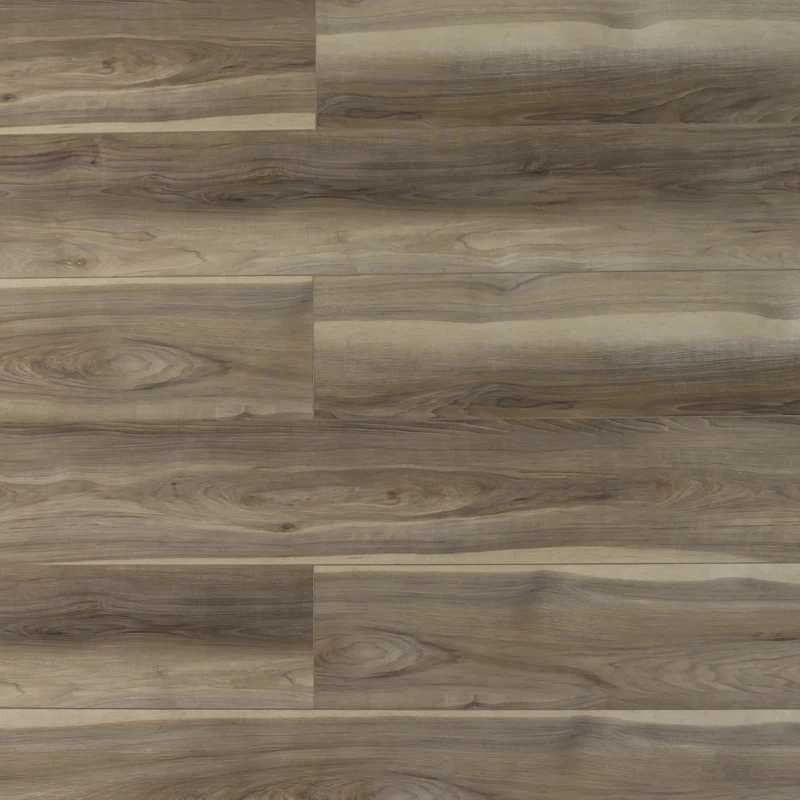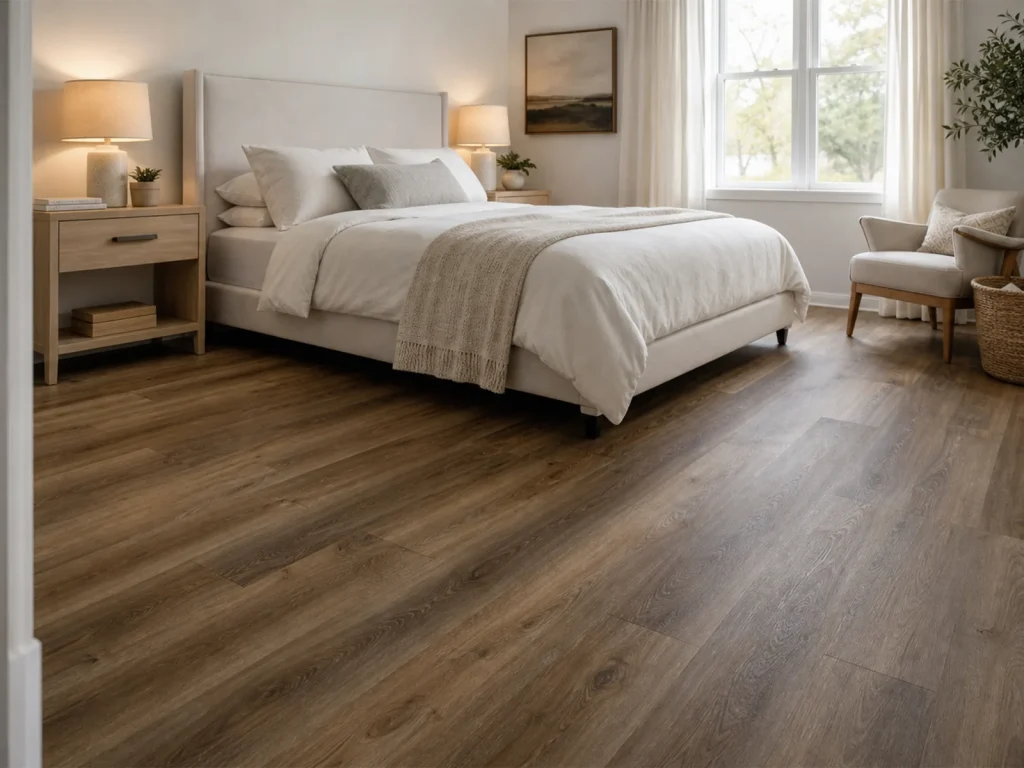
SPC flooring is rigid-core vinyl flooring with a dense, solid core. Its layered design pairs a wood-look surface with a firm plank body.
You may see SPC vinyl flooring called “stone plastic composite” or “stone polymer composite.” The Resilient Floor Covering Institute uses “Solid Polymer Core” in its guide to rigid-core flooring.
The name tells you about the floor’s construction. To choose a product, you also need to understand its specs and the needs of your space. This guide explains what to compare before buying for a California home or project.
What Is SPC Flooring Made Of?
A typical SPC plank has several layers, each with a different job:
| Part of the plank | What it does |
|---|---|
| Wear layer and surface finish | Help protect the surface during use. |
| Decorative layer | Creates the visible pattern, such as wood grain. |
| Rigid core layer | Forms the solid body of the plank. |
| Attached backing, when included | Adds a pad beneath the core. |
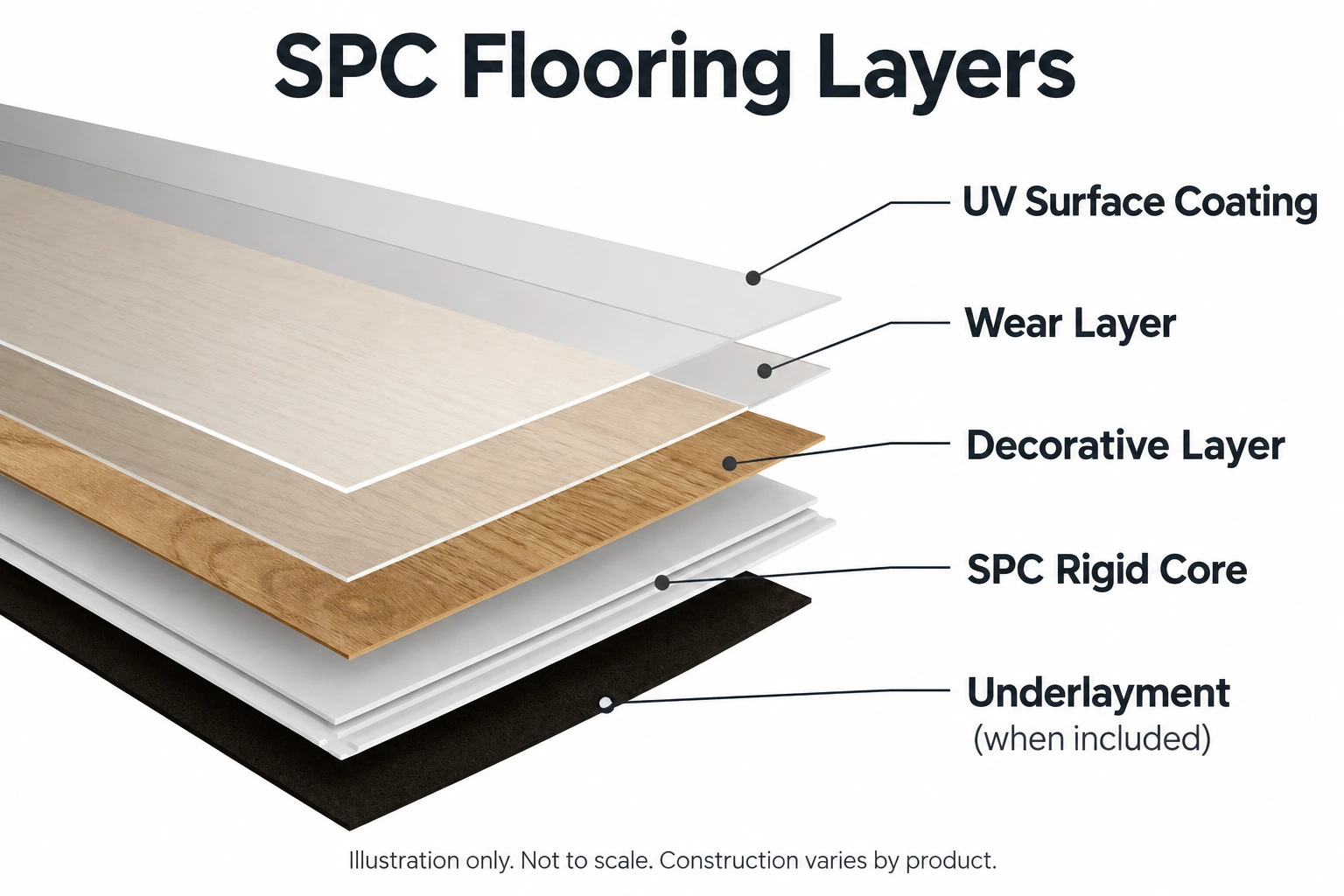
Some products include an attached pad. Check the spec sheet for its material and thickness, along with a diagram of the plank’s layers.
SPC, LVP, Rigid Core, and WPC: How the Terms Fit Together
These names describe different parts of a flooring product. A plank can be both LVP and SPC.
| Term | What it tells you |
|---|---|
| Vinyl flooring | The broad flooring category. |
| LVP, or luxury vinyl plank | Vinyl flooring in plank form. This name alone does not tell you the core type. |
| Rigid core | A construction category that includes SPC and WPC. |
| SPC | A rigid-core floor with a solid polymer core. |
| WPC | A different rigid-core type, which RFCI describes as an expanded polymer core. |
Laminate is a separate flooring category. Similar wood-look designs can make floors look alike in photos. Compare their specs and approved uses as well as their appearance.
Still choosing between materials? Read our vinyl and laminate flooring comparison, then check the documents for the products on your shortlist.
What Are the Benefits and Limits of SPC Flooring?
SPC offers a wood-look surface in a rigid plank format. Compare colors, grain patterns, and plank sizes to find a look that suits your space.
Think about daily care, too. Read the product’s care guide before choosing cleaners or cleaning equipment. Even a floor sold as easy to maintain has care rules.
Two common claims need a closer look:
- Scratch resistance: A scratch-resistant floor can still scratch. Follow the maker’s advice on care and furniture protection.
- Waterproof construction: A waterproof plank does not make the whole room or subfloor waterproof. Check which rooms and uses the product allows.
A kitchen spill, a recurring leak, and a shower floor pose different challenges. Confirm the intended use instead of relying on the word “waterproof.”
How to Read SPC Flooring Specifications Before You Buy
Total Thickness and Wear Layer Are Different Measurements
Total thickness measures the whole plank as defined by the maker. It often includes the attached pad, so check what the stated number covers.
The wear layer is a separate part of the floor. U.S. listings often give its thickness in mil and the plank’s total thickness in millimeters (mm).
One mil is one-thousandth of an inch. A 20 mil wear layer is about 0.51 mm thick. It does not mean the plank is 20 mm thick.
You may see 12 mil and 20 mil options. Compare these numbers along with the finish, approved use, and warranty. The wear layer alone cannot tell you whether a floor suits your home or business.
What an Attached Pad Does—and What It Does Not Tell You
Record the pad’s material and thickness when comparing floors. Check whether the total thickness includes it.
An attached pad does not settle every installation question. You still need to check the subfloor requirements and whether a separate moisture-control layer is needed. Only add cushioning underlayment if the product’s instructions allow it.
For an upstairs condo, ask about the building’s sound requirements. Check the required flooring system and test reports; a pad label alone does not prove that the full installation meets them.
Two CasaPro Examples: Comparing Specifications, Not Just Thickness
These CasaPro listings show why each number matters:
| CasaPro product | Total thickness | Wear layer | Attached pad |
|---|---|---|---|
| Plano | 6.5 mm | 20 mil | 1.5 mm IXPE |
| Oatmilk Dunes | 8 mm | 20 mil | 1.5 mm IXPE |
Both list a 20 mil wear layer and a 1.5 mm pad, but their total thickness differs. The thicker floor is not automatically the better choice for your project.
Use the table as a starting point. Then compare the look, full specs, and installation guide for the exact product you plan to buy.
Is SPC a Good Fit for Your California Home or Project?
Start with your rooms and how you use them.
For a home remodel, look at nearby finishes and floor heights at doorways. If possible, compare a sample in daylight and evening light. Before extending one floor into a kitchen, laundry room, or bathroom, confirm that the product allows that use.
For a rental refresh, consider foot traffic, cleaning needs, trim, and timing. Review the care guide and warranty. Keep the product name and SKU in your records so you can identify the floor later.
For a professional project, match your shortlist to the project’s specs. Confirm quantities, accessories, and current availability before setting the buying schedule. If you need an emissions certificate, request one that covers the exact product.
California homes have different floor structures. For a home on a concrete slab, arrange a check of its condition and moisture before installation. In a condo or shared building, check flooring and sound requirements before you buy.
What to Prepare Before Comparing Products or Requesting a Quote
Bring a few details to make your flooring conversation more useful:
- Rooms and measurements: Note room sizes, closets, hallways, stairs, and adjoining areas.
- Existing floor: Share what you know about the flooring, subfloor, and any moisture concerns.
- Style: Bring photos of colors you like and nearby cabinets or finishes.
- Product choices: Save names or SKUs so everyone compares the same products.
- Timing: Share your target schedule. Ask about current availability and pickup or delivery options.
- Materials: Discuss trim and transitions. Have the installer check the final order quantity against the layout, including cuts and spare material.
Homeowners can use this list to narrow their choices. Professional buyers can add project specs or a room-by-room material list to support a more precise quote.
SPC Flooring FAQs
Can You Install SPC Flooring Over Concrete?
You may be able to, if the product allows it and the slab meets its requirements. Have the installer check moisture, flatness, and any needed preparation. A waterproof plank does not remove the need to check the slab.
Do You Need Extra Underlayment with an Attached Pad?
Do not add cushioning underlayment by default. Follow the exact product’s instructions, including rules for moisture-control layers. If anything is unclear, ask before buying extra materials.
Can SPC Flooring Be Used with Radiant Heat?
Check whether the exact floor works with your heating system. Confirm the allowed temperatures and installation steps in its guide. Do not use limits from a different product.
Explore SPC Flooring and Choose Your Next Step
Choose a few products, compare their specs, and check the needs of your space before ordering.
To compare specs, start with the Plano and Oatmilk Dunes table above.
For help planning your next visit, find a CasaPro store.
Buying for a professional project? Contact CasaPro about a project quote with your product choices, quantities, and timeline.